Share capacity
The connection and the metering point stay with you. We use capacity you do not draw and carry part of the fixed cost.
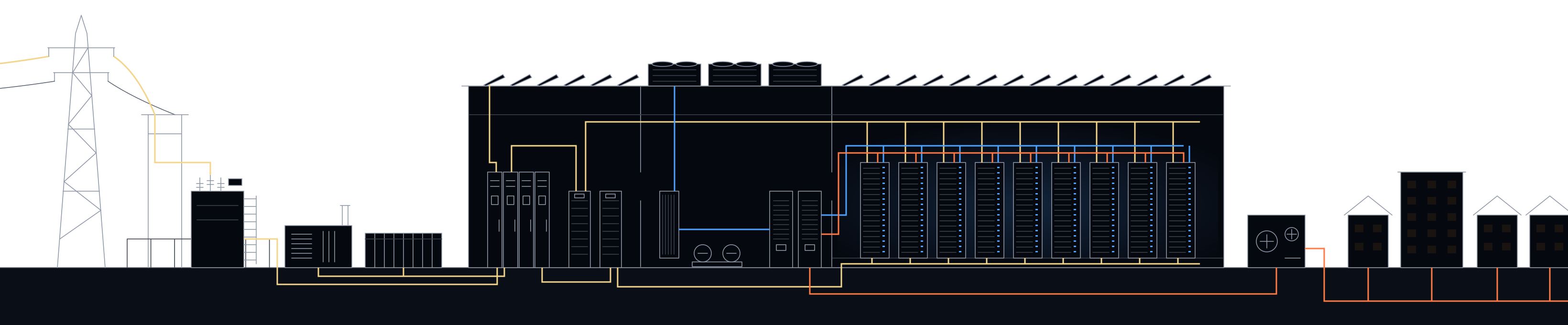
Wattfeld develops, builds and operates data centres for GPU workloads in Austria and Croatia. Scroll through one of our facilities, from the substation to the district heating main.
A new grid connection above 5 MW takes several years in Austria. In some network areas the capacity is already allocated.
So we start at industrial sites whose connection exists and is no longer fully used. That removes the wait, and the wait is the largest cost in the project.
Battery storage carries the first seconds. Standby generators take over after that, running on HVO rather than fossil diesel. Solar on the roof covers part of the auxiliary load.
Every rack is fed from two independent supplies. Path A arrives from above, path B from under the raised floor. Switchgear and UPS are duplicated.
If one path fails, the other carries the full load.
Air no longer cools an AI rack. Coolant runs through cold plates on the processors and takes the heat away where it is made.
The dry coolers on the roof run without a chiller for most of the Austrian year.
The current GPU generation puts more than 100 kW into a single cabinet. Conventional data centres were built for 5 to 10 kW.
We size the floor, the power and the cooling for that density from the first drawing.
Water returns from the racks at 45 to 55 °C. A heat pump lifts it to district heating temperature and feeds it into the municipal network.
The EU Energy Efficiency Directive requires this assessment for every data centre above 1 MW. We design the connection in from day one.
Our first project is being developed in Croatia. We publish the key figures as each project phase closes.
If a hall on your site stands empty, a shift has gone or a plant is being dismantled, the connection capacity behind it is often still contracted and still paid for. None of the three ways of working together requires you to give up the connection.
The connection and the metering point stay with you. We use capacity you do not draw and carry part of the fixed cost.
A long-term lease of hall and yard, with our own plant room. The property stays with your company.
Purchase of part of a site or of an operating company, where the site is being divested anyway. As an asset or share deal, depending on how the connection is held.
First callTwo figures are enough: the contracted connection capacity in kW and the network level. Everything else follows.
Project developer and prospective operator. We do not act as a broker, and not on behalf of an undisclosed third party.
First conversations are non-binding. We will sign a non-disclosure agreement up front on request.
Normally within two working days, in German or English.